
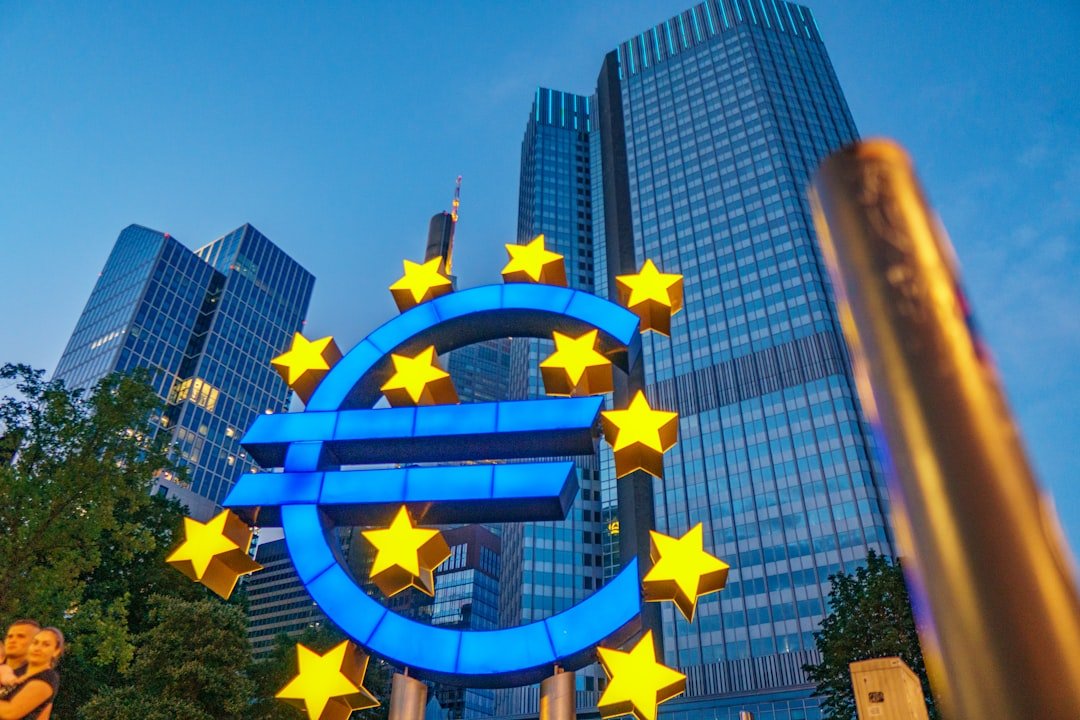
European Banks Are Building Their Answer To Dollar Stablecoins
European banks are moving from observation to infrastructure development as they prepare regulated euro-denominated stablecoins for payments, settlement and tokenised markets. Their ambition is no longer limited to experimenting with blockchain technology: they want to ensure that Europe’s emerging digital financial system does not depend almost entirely on dollar tokens issued outside the region.
The clearest evidence comes from Qivalis, the Amsterdam-based venture whose banking consortium expanded from 12 to 37 institutions in May. Its members now span 15 European countries and include BNP Paribas, ING, UniCredit, BBVA, CaixaBank, Danske Bank, Intesa Sanpaolo, Nordea and Erste Group. Qivalis is seeking authorisation from the Dutch central bank as an electronic money institution and plans to launch its euro stablecoin in the second half of 2026. Other bank-backed products are already operating or moving towards the market under the European Union’s Markets in Crypto-Assets framework.
What Qivalis Intends To Build
Qivalis is not presenting its stablecoin primarily as a European alternative for buying coffee or transferring money between friends. Existing payment systems already serve many domestic retail transactions efficiently. The more consequential opportunity lies in areas where conventional banking infrastructure remains fragmented, restricted by operating hours or difficult to connect with blockchain-based assets.
The proposed token will be fully backed by reserves and redeemable one-for-one in euros. Its intended uses include immediate on-chain payments, cross-border transfers and settlement between institutions, with distribution taking place through participating banks and other approved partners.
That structure matters because settlement is one of the unresolved problems in tokenised finance. A digital bond or fund can be issued on a blockchain, yet the corresponding cash payment often has to pass through separate systems. This weakens one of tokenisation’s main attractions: the ability to execute the transfer of an asset and its payment together, rather than reconciling them after the event.
A widely accepted euro stablecoin could provide the cash leg of those transactions. Smart contracts could exchange tokenised securities against tokenised money as a single operation, reducing settlement delays and counterparty exposure. It could also remain available outside normal banking hours, an increasingly important characteristic for markets that trade continuously.
The Euro’s Stablecoin Paradox
The euro is the world’s second most important reserve currency and accounted for roughly 20 percent of official global foreign-exchange reserves in 2025. Its position in stablecoins bears little resemblance to that broader economic weight. Only around 0.2 percent of global stablecoin circulation is currently denominated in euros.
By the end of 2025, the total stablecoin market had exceeded $300 billion, yet almost all of it remained linked to the dollar. Tether’s USDT and Circle’s USDC alone represented roughly 90 percent of the market. That scale provides more than brand recognition. It produces deep liquidity, widespread exchange listings, extensive wallet support and acceptance across decentralised-finance applications.
Previous euro products have struggled to break through this network advantage. A token becomes useful when counterparties already hold it, trading venues quote assets against it and developers integrate it into their applications. Without those connections, even a well-regulated stablecoin can remain technically functional but commercially peripheral.
Europe already has regulated examples. Société Générale-Forge launched EUR CoinVertible in 2023 and has since expanded it across several blockchains and settlement partnerships. ODDO BHF introduced EUROD in 2025, while the Italian payments company Bancomat is testing EUR.BANK with domestic banks. Their development shows that issuance is possible under European rules, but the limited circulation of euro stablecoins also demonstrates that regulation alone does not create demand.
Why Banks Are Entering Now
For several years, European banks could afford to treat stablecoins as a specialist component of crypto trading. That position has become harder to maintain as tokenisation moves closer to mainstream capital markets.
Banks, exchanges and infrastructure providers are experimenting with tokenised bonds, funds, deposits and collateral. A settlement asset is required wherever those instruments change hands. Unless European institutions develop credible euro-based options, market participants may default to dollar stablecoins simply because they are already liquid and widely integrated.
The EU’s MiCA regime has also provided a common legal framework for issuing and distributing stablecoins across member states. The rules impose reserve, redemption, governance and disclosure requirements on issuers of electronic-money tokens. They are demanding, but they give banks greater clarity about what a compliant product should look like and how it can be offered across borders.
There is a defensive commercial calculation behind the projects. Stablecoins can move value directly between blockchain addresses, potentially bypassing parts of the correspondent-banking, card and clearing infrastructure from which financial institutions currently earn fees. By becoming issuers, distributors and custodians themselves, banks can participate in the new payment architecture rather than surrendering it to crypto-native companies.
The geopolitical dimension is equally important. The spread of dollar stablecoins could reinforce the dollar’s international position through network effects rather than through an explicit choice by governments or businesses. Once dollar tokens become the default settlement medium for tokenised assets, their use may extend into invoicing, collateral management and cross-border commerce. The result would be a digital market whose technical rails are global but whose monetary centre remains overwhelmingly American.
Payments Are Only Part Of The Opportunity
The immediate appeal of stablecoins is usually explained through faster and less expensive international payments. A token can move across a public blockchain at any time, without waiting for a sequence of correspondent banks to process the transfer.
Yet the strongest institutional use case may develop in capital markets rather than everyday payments. Tokenised securities require a dependable means of settlement that can operate within the same programmable environment. A euro stablecoin distributed by 37 banks would have a plausible route into treasury operations, securities trading, collateral transfers and corporate cash management.
The opportunity is developing alongside public infrastructure. The Eurosystem plans to introduce Pontes in the third quarter of 2026, connecting distributed-ledger platforms with its TARGET settlement services. Its longer-term Appia programme is intended to support a more integrated European ecosystem for tokenised finance. These initiatives favour settlement in central-bank money, while private stablecoins and tokenised commercial-bank deposits may serve other layers of the market.
The systems are therefore not necessarily substitutes. Central-bank money remains the safest settlement asset between financial institutions, but a private stablecoin may be easier to circulate across public blockchains, use within smart contracts or distribute to companies outside the banking sector. The eventual market could contain several forms of digital euros, each designed for a different level of risk, access and transaction size.
For investors, that creates a broader field of exposure than stablecoin issuers alone. European banks could gain new transaction, custody and treasury-management revenues. Exchanges and market-infrastructure groups may benefit from higher volumes in tokenised securities. Payment companies, blockchain networks and compliance providers will compete to supply the connectivity around them.
Europe Still Has To Overcome The Dollar’s Lead
A consortium of 37 banks gives Qivalis potential distribution, credibility and access to corporate relationships. It does not automatically give the token liquidity.
Dollar stablecoins are embedded in the most active trading pairs, wallets and decentralised applications. They are accepted across jurisdictions, frequently used as collateral and supported by market makers capable of handling large transactions. Their dominance is difficult to displace because every additional user makes the existing network more useful.
The European initiatives also risk fragmenting their own market. Qivalis, EUR CoinVertible, EUROD and EUR.BANK may all satisfy different institutional requirements, but several incompatible products could divide liquidity rather than concentrate it. Banks will have to agree on technical standards, redemption processes and interoperability across blockchains. Exchanges and custodians will then decide which tokens receive meaningful support.
The reserve model raises further questions. Safe and liquid backing is essential to confidence, but conservative reserves can limit profitability, while MiCA restricts the payment of interest on electronic-money tokens. Institutional investors accustomed to earning a return on cash may be reluctant to hold large balances unless the token offers substantial operational advantages.
Adoption will therefore depend less on whether the stablecoin works than on what users can do with it. Banks need corporate payment corridors, securities platforms, exchanges and treasury applications that make holding the token worthwhile. Market makers must be prepared to quote it in size, and redemption must remain reliable during periods of stress.
Qivalis represents a significant change in the European banking sector’s posture. Major institutions are no longer waiting to see whether stablecoins become part of the financial system; they are preparing the infrastructure through which they intend to participate.
The project may give the euro a credible settlement asset for tokenised markets, but issuance will be only the beginning. Europe’s answer to dollar stablecoins will be judged by liquidity, distribution and interoperability—not by the number of banks whose names appear in the consortium.