When Stocks Rise And Volatility Rises With Them
Equity investors usually associate volatility with falling markets because demand for protection increases when share prices decline, pushing option prices higher and lifting volatility indices. The relationship can reverse during exceptionally aggressive rallies, however, when investors who fear missing the advance begin buying call options so quickly that implied volatility rises alongside the market.
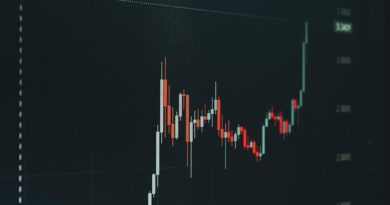
The pattern has appeared during the sharp US equity rebound in August 2026. After a difficult July, investors rushed back towards equities, particularly technology and AI-related shares, while demand for short-dated calls increased as traders attempted to rebuild exposure quickly. The resulting market produced an unusual combination: share prices moved higher while measures of volatility remained elevated or rose during parts of the advance.
Call buying can influence the underlying market through dealer hedging. When an investor purchases a call, the market maker selling that option may hedge part of the exposure by buying the underlying shares. If the stock continues rising and the option’s delta increases, the dealer may need to buy additional shares, allowing the original options demand to generate further demand in the cash market.
The mechanism becomes particularly powerful when traders concentrate on short-dated options because gamma increases as contracts approach expiration, especially around strikes close to the current share price. A relatively small movement in the underlying asset can then produce a larger change in the hedge required by the dealer, which makes positioning more sensitive to intraday price moves.
None of this means that call buyers mechanically force every rally higher. Dealers hold complex portfolios containing puts, calls and positions across multiple strikes and maturities, while institutional investors can take the opposite side of retail activity. The effect depends on aggregate positioning, which is why options-market data needs interpretation rather than a simple rule connecting call volume with future gains.
Rising volatility during an advance can nevertheless tell traders something about the character of the move. A gradual rally accompanied by declining implied volatility suggests that investors are becoming more comfortable as prices rise, whereas strong call demand can indicate that participants are paying increasingly high premiums to obtain upside exposure. Both environments can produce higher prices, but the positioning behind them differs considerably.
Fear of missing out becomes particularly relevant after a rapid reversal because investors who reduced exposure during the decline can suddenly find themselves underweight when the market rebounds. Buying shares restores exposure directly, while calls offer a way to participate with less initial capital and defined downside. When many investors make that choice simultaneously, upside options can become expensive even though the traditional demand for downside insurance has weakened.
Traders therefore need to examine skew rather than relying exclusively on headline volatility indices. Equity options usually price downside puts at higher implied volatility than equivalent upside calls because investors routinely pay for crash protection. Aggressive demand for calls can flatten that relationship or make particular upside strikes unusually expensive, revealing where traders are competing most intensely for exposure.
Realised volatility adds another dimension. Markets often move more violently on declining days than advancing ones, but a powerful catch-up rally can produce unusually large positive sessions. When upside realised volatility increases, option sellers need compensation for the possibility that shares move sharply in either direction, which can support implied volatility even without widespread fear of a decline.
The environment also complicates covered-call strategies. Investors may welcome elevated option premiums because selling calls generates more income, yet the same volatility that increases the premium reflects a greater probability of large price movements. During an accelerating rally, a covered-call investor can quickly surrender substantial upside when the underlying shares move through the strike.
Buying calls carries the opposite problem because enthusiasm can make upside exposure expensive precisely when traders feel most compelled to own it. A buyer can correctly predict that the market will rise and still produce a disappointing return if the option price already incorporated an unusually large expected move. Direction, timing and implied volatility therefore need to work together.
For traders accustomed to interpreting a higher volatility index as a straightforward warning signal, a call-driven rally provides a useful reminder that options prices measure demand for uncertainty rather than fear alone. Investors can become anxious about missing gains just as they become anxious about suffering losses, and both forms of urgency can increase the price of optionality.
The more informative question during an unusual rally is consequently who is paying for which part of the distribution. When investors aggressively purchase upside exposure, volatility can rise because the market is repricing the probability of a larger positive move. The index may be climbing, but the options market can simultaneously be saying that traders have become less certain about how far that climb will go.